Grocery Coupon Stacking to Cut Your Bill
Learn grocery coupon stacking methods that combine manufacturer coupons, store offers, and app rebates to slash your weekly grocery bill by 30% or more.
Anúncios
Combining multiple discounts on a single grocery item is the core of grocery coupon stacking, and it works better than most people expect. When a manufacturer coupon, a store digital offer, and a cashback app rebate all apply to the same product, your effective price can drop to near zero.
What Exactly Is Grocery Coupon Stacking?
Coupon stacking means applying two or more discounts from different sources to one item in a single transaction. A manufacturer coupon comes from the brand. A store coupon comes from the retailer. A cashback rebate comes from a third-party app. These three layers don't conflict because each one is funded by a different party.
Anúncios
Not every store allows stacking, and the rules vary. Kroger, Target, and CVS are stacking-friendly. Walmart generally allows one coupon per item but combines it with app-based savings like Ibotta. Knowing your store's policy is step one.
How to Find Manufacturer Coupons That Stack
Brand websites, Coupons.com, and the Sunday newspaper inserts remain the top sources for manufacturer coupons. Digital versions load directly to your store loyalty card. Paper coupons require handing them to the cashier at checkout.
Anúncios
Sign up for email lists from brands you buy regularly. Procter & Gamble, General Mills, and Kellogg's all send high-value coupons monthly to subscribers. These targeted offers often exceed the generic coupons found in public databases.
Which Store Digital Coupons Combine With Manufacturer Offers?
Kroger's digital coupons stack with manufacturer coupons automatically when both are loaded to your loyalty card. Target Circle offers combine with manufacturer coupons at checkout. CVS ExtraCare digital deals stack with both manufacturer coupons and ExtraBucks rewards.
Load all available digital coupons to your loyalty card before shopping. Most store apps let you browse and clip coupons by category in under five minutes. The loaded coupons apply automatically at the register when you scan eligible items.
Can You Add Cashback Apps on Top of Coupons?
Absolutely. Ibotta, Checkout 51, and Fetch Rewards all pay rebates after you scan your receipt, completely independent of any coupons applied at the register. The cashback app sees the item on your receipt and credits your account regardless of what you paid.
A real example: $1 off a cereal box from the manufacturer coupon, $0.75 off from the store digital coupon, and $0.50 back from Ibotta. On a $3.50 box of cereal, your net cost is $1.25 — a 64% reduction from three non-conflicting sources.
What Is the Best Day to Stack Grocery Coupons?
Match coupons to weekly sale cycles for maximum impact. Most grocery stores release new weekly ads on Wednesday or Thursday. Aligning your coupon stack with the sale price creates a triple discount: sale price, manufacturer coupon, and store coupon.
Double coupon days at stores that still offer them multiply your savings further. Kroger affiliates occasionally run double coupon promotions that double the face value of manufacturer coupons up to $0.99, turning a $0.75 coupon into $1.50 off.
How to Organize Your Coupon Stacking Strategy
Start with the weekly sales flyer, then match manufacturer coupons to items already on sale. Next, check the store's digital coupon section for overlapping offers. Finally, look at cashback apps for any additional rebates on those same products.
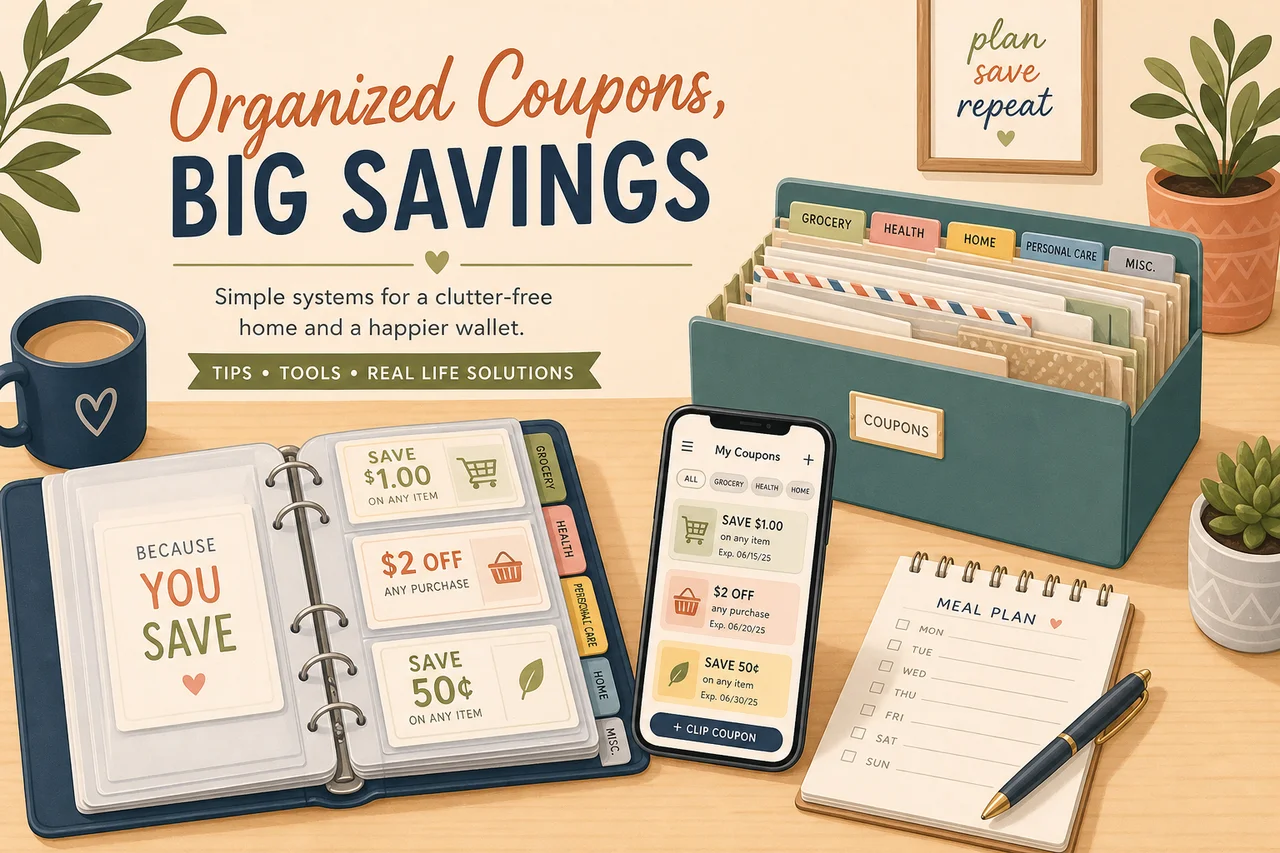
A binder or coupon wallet organized by category keeps paper coupons accessible during shopping trips. For digital-only stackers, a simple checklist on your phone noting which coupons you loaded and which cashback offers are active works just as well.
Does Coupon Stacking Work for Organic and Natural Products?
Organic brands like Annie's, Stonyfield, and Organic Valley offer manufacturer coupons on their websites and through Coupons.com. These stack with store coupons and cashback offers the same way conventional product coupons do.
Whole Foods runs weekly sales that combine with Amazon Prime member discounts and digital coupons in the Whole Foods app. Stacking these three layers on organic products brings prices closer to conventional alternatives at regular grocery stores.
Common Stacking Mistakes That Get Coupons Rejected
Using two manufacturer coupons on the same item violates most store policies and causes register errors. Make sure one coupon is from the manufacturer and the other is from the store. Cashiers trained in coupon policy will catch this and void the transaction.
Expired coupons and wrong product sizes trigger rejections. Always verify the expiration date and product requirements match exactly what you're buying. A coupon for the 12-ounce size won't scan on the 8-ounce package even if the brand matches.
How Much Can Coupon Stacking Save Per Week?
Dedicated stackers who match coupons to sales regularly save 30-50% on their weekly grocery bill. On a $150 weekly shopping trip, that translates to $45-$75 in savings. Over a year, consistent stacking saves $2,000-$3,000 for an average family.
The time investment averages 30-45 minutes per week once you establish a routine. Experienced stackers get faster at spotting matches and can plan a full stacking list in under 20 minutes using digital tools.
Digital Tools That Make Stacking Easier
Flipp aggregates weekly flyers from stores in your area and matches them against available coupons. The Krazy Coupon Lady blog publishes daily matchup lists pairing sales with coupons for major retailers, eliminating most of the research legwork.
Store apps like Target, Kroger, and CVS now show when multiple discounts apply to the same item. The app interface highlights stackable offers, making it easier than ever to build multi-layer savings without manual tracking.
Building Your First Coupon Stacking Shopping List
Pick five staple items your household buys weekly. Check for manufacturer coupons, store digital offers, and cashback app rebates on each one. Start small to build confidence before attempting full-cart stacking on every item in your grocery list.
Track your actual savings on the receipt compared to what you would have paid without stacking. Seeing the dollar amount reinforces the habit and motivates you to expand your stacking strategy to more product categories each week.
- Review the weekly sales flyer from your primary grocery store
- Match manufacturer coupons from Coupons.com or brand websites to sale items
- Load store digital coupons to your loyalty card for overlapping products
- Check Ibotta and Checkout 51 for cashback rebates on those same items
- Shop and scan your loyalty card at checkout to auto-apply stacked coupons
- Scan receipt in cashback apps to claim remaining rebates after checkout